
MOTS-c
$33.99
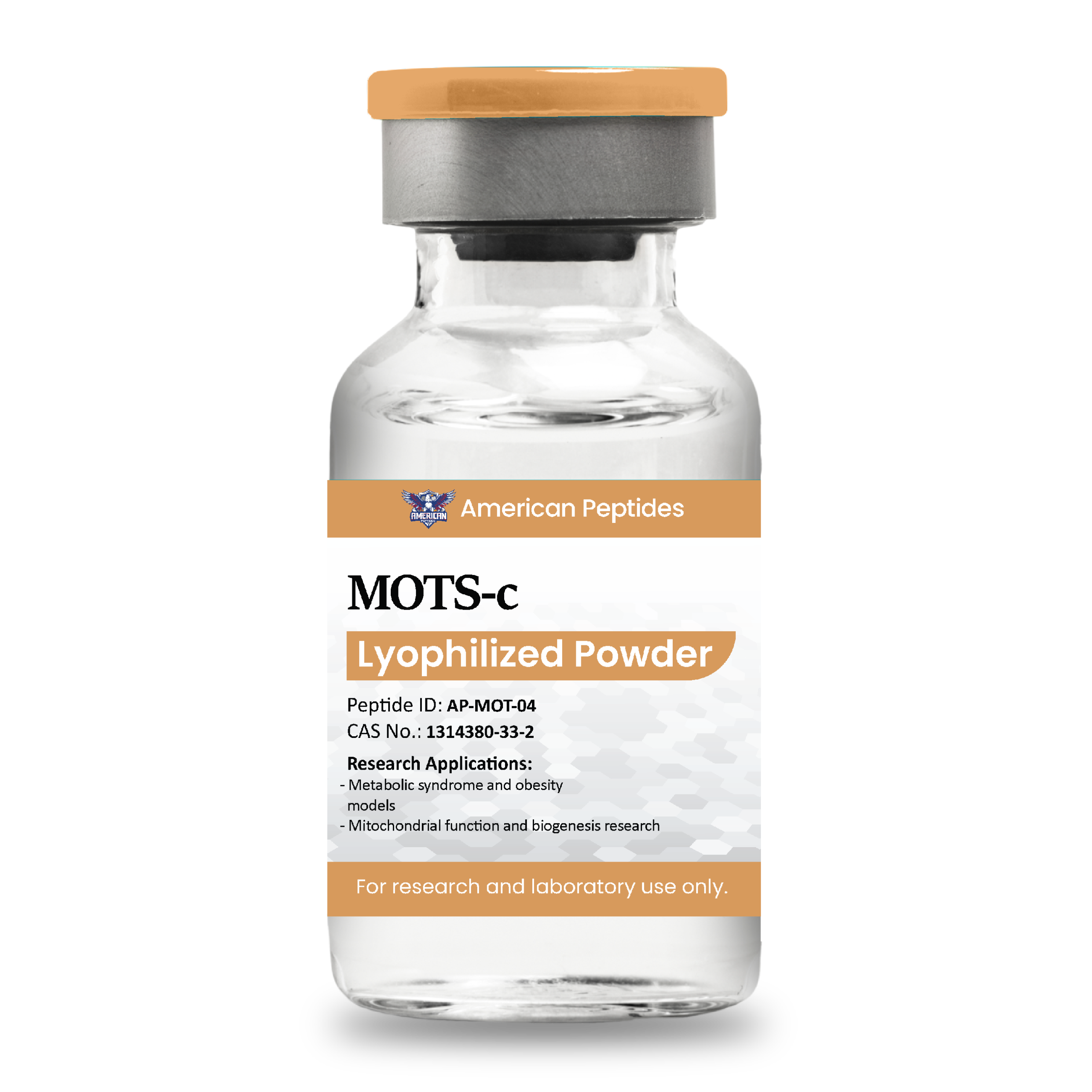
MOTS-c is a mitochondrial-derived peptide that regulates metabolism, improves insulin sensitivity, and enhances cellular stress resistance, making it a powerful research tool in studies of aging, metabolic diseases, and exercise physiology.
MOTS-c (Mitochondrial Open Reading Frame of the 12S rRNA-C) is a mitochondrial-derived peptide that plays a unique role in metabolic regulation, stress resistance, and cellular homeostasis. Expressed from mitochondrial DNA, MOTS-c is emerging as a key factor in studies of aging, energy regulation, and exercise physiology. It modulates nuclear gene expression, improves insulin sensitivity, and enhances cellular stress responses, making it a powerful tool for research into metabolic diseases, sarcopenia, and mitochondrial function.
– Form: Lyophilized peptide
– Purity: ≥99%
– Origin: Manufactured and tested in the USA
– Certifications: Certificate of Analysis (COA) included with every order
MOTS-c exerts its effects by:
– Activating AMPK signaling to regulate energy balance
– Enhancing glucose uptake and fatty acid oxidation
– Promoting mitochondrial biogenesis and function
– Modulating stress adaptation genes in the nucleus
– Supporting skeletal muscle resilience and insulin sensitivity
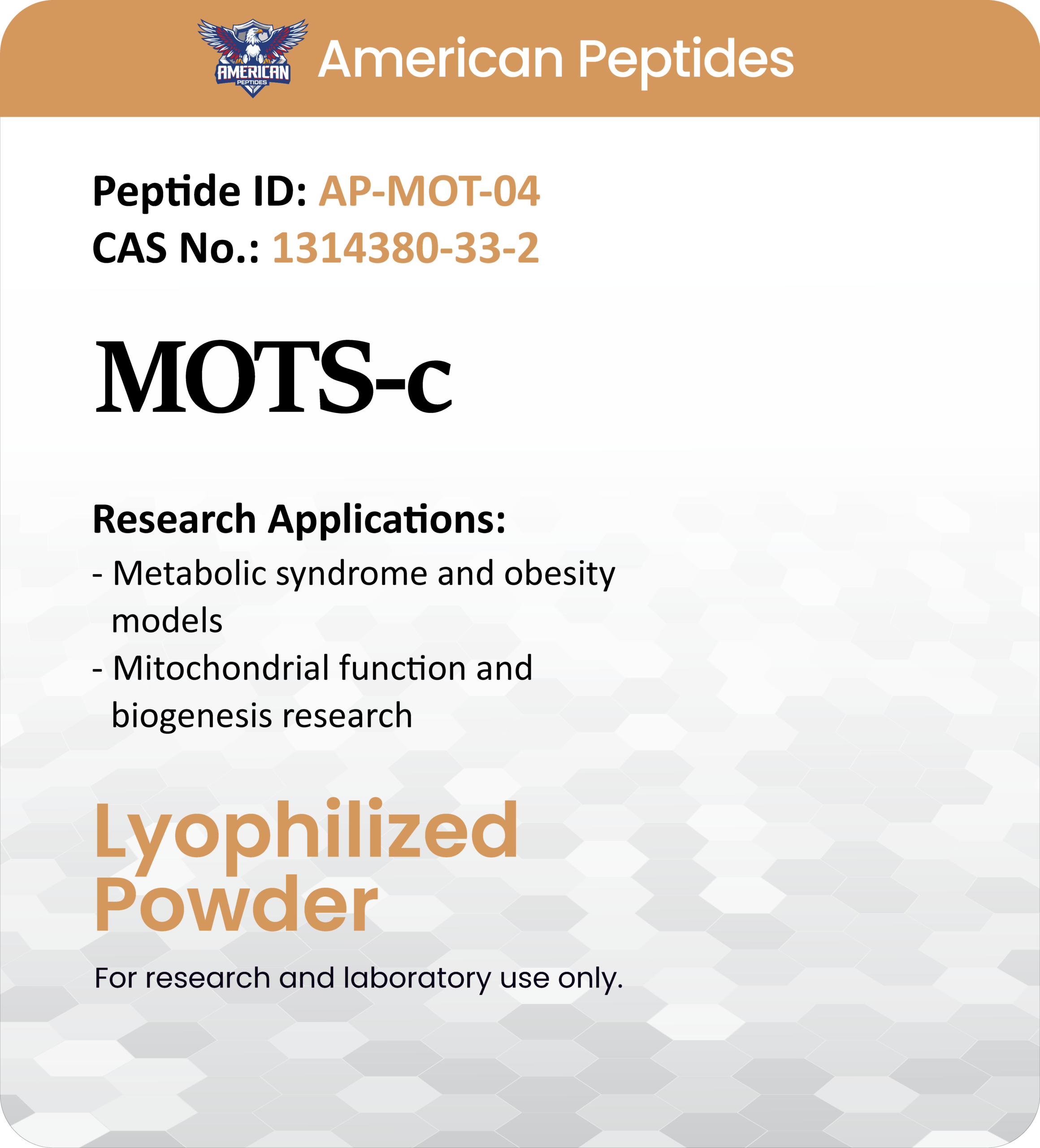
– Metabolic syndrome and obesity models
– Mitochondrial function and biogenesis research
– Exercise mimetic and endurance studies
– Insulin resistance and glucose metabolism studies
– Aging and cellular stress response models
– Mitochondrial origin peptide with systemic regulatory effects
– Strong preclinical support in energy metabolism and aging
– Enhances metabolic flexibility and exercise endurance
– Exceptional stability and purity for research integrity
Each vial is:
– Manufactured in a GMP-compliant U.S. facility
– Accompanied by a Certificate of Analysis (COA)
– Subjected to HPLC and mass spectrometry verification
– Shipped from within the United States for quality control
– Contents: 5, 10, 20mg of lyophilized MOTS-c peptide
– Appearance: White/off-white powder
– Solubility: Sterile bacteriostatic water recommended
– Storage: Store lyophilized vial at -20°C; reconstituted solution stable up to 30 days when refrigerated
*For laboratory research use only. Not intended for human or veterinary use.*
MOTS-c is a mitochondrial-derived peptide (MDP) consisting of 16 amino acids. It is encoded by mitochondrial DNA and is currently being studied for its unique role in metabolic regulation, insulin sensitivity, and cellular stress response.
MOTS-c works by activating the AMPK (AMP-activated protein kinase) pathway, which enhances glucose uptake, promotes fat oxidation, and supports mitochondrial biogenesis. It also helps regulate inflammatory responses and improve metabolic homeostasis under stress conditions.
Our MOTS-c is offered as a lyophilized powder in sterile, single-use vials. Every vial is produced in the USA and tested for identity, purity, and stability under rigorous laboratory standards.
Store MOTS-c in its lyophilized form at -20°C, protected from light and humidity. Once reconstituted, keep it refrigerated at 2–8°C and use within the recommended research window.
Our MOTS-c is ≥98% pure, verified through HPLC and Mass Spectrometry. Each order includes a batch-specific Certificate of Analysis (COA) confirming the product’s quality and identity.
Yes. While our standard packaging protects product integrity during most shipping conditions, cold-chain shipping is available upon request for added peace of mind.
Yes. In research models, MOTS-c is often explored in combination with metabolic peptides such as AOD-9604 or GLP-1 agonists to study synergistic effects on energy regulation and insulin sensitivity. All such use must remain within approved research guidelines.
Visit the Lab Test Results page, select ‘MOTS-c’ from the dropdown menu, and provide your email address. We’ll send your batch-specific COA directly to your inbox.
We offer ≥98% pure, U.S.-manufactured MOTS-c that’s lab-tested, COA-backed, and ready for immediate shipping. Plus, with our Price Match Guarantee, if you find the same quality elsewhere for less—we’ll match it. Legion Peptides ensures your research starts with premium-grade materials.
MOTS-C Dosage Protocol (5mg, 10mg, 20mg Vials)
Quickstart Highlights
MOTS-c is a 16–amino-acid mitochondrial-derived peptide (MDP) that acts as a metabolic regulator, primarily through AMPK activation[1][2]. Preclinical studies show it enhances insulin sensitivity, promotes fat oxidation, improves exercise capacity, and counters age-related metabolic decline[1][4]. No clinical trials have been completed in humans to date[8]. This educational protocol presents a once-daily subcutaneous approach with gradual titration for all vial sizes (5mg, 10mg, 20mg).
- 5mg Vial Reconstitution: Add 3.0 mL bacteriostatic water → ~1.67 mg/mL concentration.
- 10mg Vial Reconstitution: Add 3.0 mL bacteriostatic water → ~3.33 mg/mL concentration.
- 20mg Vial Reconstitution: Add 3.0 mL bacteriostatic water → ~6.67 mg/mL concentration.
- Typical daily range: 200–1,000 mcg once daily (gradual titration over 10 weeks).
- Storage: Lyophilized: freeze at −20 °C (−4 °F) or below; after reconstitution, refrigerate at 2–8 °C (35.6–46.4 °F) and use within 7 days for best potency.
Dosing & Reconstitution Guide
Educational guide for all vial sizes (5mg, 10mg, 20mg)
5 mg Vial Protocol (3 mL = ~1.67 mg/mL)
| Week | Daily Dose (mcg) | Units (per injection) (mL) |
|---|---|---|
| Weeks 1–2 | 200 mcg | 12 units (0.12 mL) |
| Weeks 3–4 | 400 mcg | 24 units (0.24 mL) |
| Weeks 5–6 | 600 mcg | 36 units (0.36 mL) |
| Weeks 7–8 | 800 mcg | 48 units (0.48 mL) |
| Weeks 9–10+ | 1,000 mcg (1.0 mg) | 60 units (0.60 mL) |
Concentration: 1.67 mg/mL • Easy measuring: 1 unit = 0.01 mL ≈ 16.7 mcg on U‑100 insulin syringe
Frequency: Inject once daily subcutaneously[7]. This schedule uses the largest practical dilution (3.0 mL) to maintain per‑injection accuracy. Stay at each dose level for approximately 2 weeks before increasing, and monitor for any adverse reactions[7].
10 mg Vial Protocol (3 mL = ~3.33 mg/mL)
| Week | Daily Dose (mcg) | Units (per injection) (mL) |
|---|---|---|
| Weeks 1–2 | 200 mcg (0.2 mg) | 6 units (0.06 mL) |
| Weeks 3–4 | 400 mcg (0.4 mg) | 12 units (0.12 mL) |
| Weeks 5–6 | 600 mcg (0.6 mg) | 18 units (0.18 mL) |
| Weeks 7–8 | 800 mcg (0.8 mg) | 24 units (0.24 mL) |
| Weeks 9–10+ | 1,000 mcg (1.0 mg) | 30 units (0.30 mL) |
Concentration: 3.33 mg/mL • Easy measuring: 1 unit = 0.01 mL ≈ 33.3 mcg on U‑100 insulin syringe
Frequency: Inject once daily subcutaneously[7]. This concentration is ideal for lower-volume injections. For ≤10‑unit administrations, consider 30‑ or 50‑unit insulin syringes for improved readability.
20 mg Vial Protocol (3 mL = ~6.67 mg/mL)
| Week | Daily Dose (mcg) | Units (per injection) (mL) |
|---|---|---|
| Weeks 1–2 | 200 mcg (0.2 mg) | 3 units (0.03 mL) |
| Weeks 3–4 | 400 mcg (0.4 mg) | 6 units (0.06 mL) |
| Weeks 5–6 | 600 mcg (0.6 mg) | 9 units (0.09 mL) |
| Weeks 7–8 | 800 mcg (0.8 mg) | 12 units (0.12 mL) |
| Weeks 9–10+ | 1,000 mcg (1.0 mg) | 15 units (0.15 mL) |
Concentration: 6.67 mg/mL • Easy measuring: 1 unit = 0.01 mL ≈ 66.7 mcg on U‑100 insulin syringe
Frequency: Inject once daily subcutaneously[7]. The 20mg vial provides the most concentrated solution, requiring the smallest injection volumes. Use 30‑ or 50‑unit insulin syringes for best accuracy with low-volume doses.
Reconstitution Steps (All Vial Sizes)
- Draw 3.0 mL bacteriostatic water with a sterile syringe.
- Inject slowly down the vial wall; avoid foaming.
- Gently swirl/roll until dissolved (do not shake vigorously).
- Label with reconstitution date and refrigerate at 2–8 °C (35.6–46.4 °F), protected from light.
- Use within 7 days for optimal potency[7].
Supplies Needed
Plan based on an 8–12 week daily protocol with gradual titration.
- Peptide Vials (MOTS-C):
- 5mg vials: 8 weeks ≈ 6 vials • 12 weeks ≈ 12 vials • 16 weeks ≈ 20 vials
- 10mg vials: 8 weeks ≈ 3 vials • 12 weeks ≈ 6 vials • 16 weeks ≈ 9 vials
- 20mg vials: 8 weeks ≈ 2 vials • 12 weeks ≈ 3 vials • 16 weeks ≈ 5 vials
- Insulin Syringes (U‑100):
- Per week: 7 syringes (1/day)
- 8 weeks: 56 syringes
- 12 weeks: 84 syringes
- 16 weeks: 112 syringes
- Bacteriostatic Water (10 mL bottles): Use ~3.0 mL per vial for reconstitution.
- 5mg vials (6 vials): 18 mL → 2 × 10 mL bottles
- 10mg vials (3 vials): 9 mL → 1 × 10 mL bottle
- 20mg vials (2 vials): 6 mL → 1 × 10 mL bottle
- Alcohol Swabs: One for the vial stopper + one for the injection site each day.
- Per week: 14 swabs (2/day)
- 8 weeks: 112 swabs → recommend 2 × 100‑count boxes
- 12 weeks: 168 swabs → recommend 2 × 100‑count boxes
- 16 weeks: 224 swabs → recommend 3 × 100‑count boxes
Protocol Overview
Concise summary of the once‑daily regimen.
- Goal: Support metabolic homeostasis, insulin sensitivity, and age-related physical performance based on preclinical evidence[1][2][4].
- Schedule: Daily subcutaneous injections for 8–12 weeks (extend to 16 weeks if desired).
- Dose Range: 200–1,000 mcg daily with gradual titration over 10 weeks.
- Reconstitution: 3.0 mL per vial for accurate unit measurements across all sizes.
- Storage: Lyophilized frozen at −20 °C (−4 °F); reconstituted refrigerated at 2–8 °C (35.6–46.4 °F); avoid repeated freeze–thaw.
Dosing Protocol
Suggested daily titration approach based on animal-to-human extrapolation.
- Start: 200 mcg daily for 2 weeks.
- Titration: Increase by ~200 mcg every 2 weeks: 400 mcg (Weeks 3–4), 600 mcg (Weeks 5–6), 800 mcg (Weeks 7–8).
- Target: Up to 1,000 mcg (1.0 mg) daily by Weeks 9–10+ if well tolerated[7].
- Frequency: Once per day (subcutaneous).
- Cycle Length: 8–12 weeks; optional extension to 16 weeks.
- Timing: Any consistent time; rotate injection sites.
Storage Instructions
Proper storage preserves peptide quality and potency.
- Lyophilized: Store at −20 °C (−4 °F) or below in dry, dark conditions; include desiccant if available to minimize moisture exposure.
- Reconstituted: Refrigerate at 2–8 °C (35.6–46.4 °F); peptide degrades rapidly at room temperature (~25% activity loss after 24 hours at 4 °C)[7]. Use within 7 days for best potency.
- Aliquoting: Prepare single-use aliquots and freeze at −20 °C (−4 °F) if needed; avoid freeze–thaw cycles.
- Allow vials to reach room temperature before opening to reduce condensation uptake.
Important Notes
Practical considerations for consistency and safety.
- Use new sterile insulin syringes for each injection; dispose in a sharps container[11].
- Rotate injection sites (abdomen, thighs, upper arms) to reduce local irritation and prevent lipohypertrophy[11].
- Inject slowly; wait a few seconds before withdrawing the needle.
- Document daily dose, injection site, and any observations to maintain consistency.
- Discontinue use and consult a medical professional if any concerning symptoms arise.
How This Works
MOTS-c functions as a metabolic "stress signal" that helps optimize energy usage during nutrient stress or exercise[2]. Its primary mechanism is AMPK activation through inhibition of the folate cycle, causing accumulation of AICAR (an AMP analog)[1][2]. Activated AMPK shifts cells into an energy-efficient mode – enhancing glucose uptake, fatty-acid oxidation, and mitochondrial respiration while downregulating fat storage and gluconeogenesis[2].
MOTS-c can also translocate to the cell nucleus under stress conditions and upregulate antioxidant and stress-response genes[2]. This retrograde signaling from mitochondria to nucleus increases expression of cytoprotective enzymes, helping cells cope with oxidative stress. Research indicates MOTS-c may also modulate mTOR and inflammatory pathways, contributing to lifespan and healthspan effects[10]. Its actions resemble those of exercise and metformin at a cellular level[2], making it of great interest for metabolic disorders, obesity, and aging research.
Potential Benefits & Side Effects
Observations from preclinical literature (no human clinical trials completed to date)[8]:
- Metabolic Health: Improves insulin sensitivity and glucose metabolism in mouse models; prevents diet-induced insulin resistance[1][7].
- Weight & Fat Reduction: Prevents obesity and reduces visceral fat in obese mice through increased energy expenditure and fat oxidation[1][7].
- Post-Menopausal Metabolism: Mitigates metabolic decline in ovariectomized mice; prevents menopause-related fat gain and insulin resistance[3].
- Physical Performance: Enhances exercise capacity and counters age-related frailty; old mice ran 2× longer on treadmill tests[4][7].
- Organ Protection: Reduces liver fat accumulation, improves cardiac function, and may support cognitive function in preliminary studies[2][7].
- Bone & Immunity: Promotes osteoblast activity, inhibits osteoclast formation; modulates immune aging and protects pancreatic islet cells in autoimmune diabetes models[5][10].
- Safety: No adverse effects reported in preclinical studies; human tolerability unknown. A modified analog (CB4211) showed good tolerability in a Phase 1 trial[7].
Note: These benefits have been demonstrated only in controlled research settings (mice or cells). Translation to humans requires clinical studies.
Lifestyle Factors
Complementary strategies for best outcomes based on MOTS-c's metabolic mechanisms.
- Pair with a balanced, protein-forward diet tailored to energy needs.
- Combine resistance training and aerobic activity to reinforce metabolic adaptations and AMPK signaling[4][8].
- Prioritize sleep (7–9 hours) and stress management to support mitochondrial health and recovery.
- Consider intermittent fasting or caloric restriction, which may synergize with MOTS-c's AMPK-mediated effects.
Injection Technique
General subcutaneous guidance from clinical best‑practice resources[9][11]:
- Clean the vial stopper and skin with alcohol; allow to dry completely.
- Pinch a skinfold; insert the needle at 90° (45° if very lean) into subcutaneous tissue[11].
- Do not aspirate for subcutaneous injections; inject slowly and steadily over a few seconds[9].
- Withdraw needle at the same angle; apply gentle pressure if bleeding occurs (do not rub).
- Rotate sites systematically (abdomen at least 2 inches from navel, outer thighs, back of upper arms) to avoid irritation and lipohypertrophy[11].
- Dispose of used syringes immediately in a proper sharps container (never reuse needles)[11].
Recommended Source
We recommend American Peptides for high‑purity MOTS-C (5mg, 10mg, 20mg vials).
Why American Peptides?
- High‑purity, third‑party‑tested lots with batch COAs.
- Consistent, ISO‑aligned handling and documentation.
- Reliable fulfillment to maintain cold‑chain integrity.
Important Note
This content is intended for therapeutic educational purposes only and does not constitute medical advice, diagnosis, or treatment. MOTS-c is an experimental compound for research use only. No clinical trials have been completed in humans. Always consult qualified healthcare providers before starting any new therapy.
References
-
Cell Metabolism (2015) — The mitochondrial-derived peptide MOTS-c promotes metabolic homeostasis and reduces obesity and insulin resistance (Lee C, Zeng J, Drew BG, et al.)
-
Journal of Translational Medicine (2023) — Mitochondria-derived peptide MOTS-c: effects and mechanisms related to stress, metabolism and aging (Wan W, Zhang L, Lin Y, et al.)
-
Journal of Molecular Medicine (2019) — MOTS-c peptide regulates adipose homeostasis to prevent ovariectomy-induced metabolic dysfunction (Lu H, Wei M, Zhai Y, et al.)
-
Nature Communications (2021) — MOTS-c is an exercise-induced mitochondrial-encoded regulator of age-dependent physical decline and muscle homeostasis (Reynolds JC, Lai RW, Woodhead JST, et al.)
-
Frontiers in Physiology (2023) — Role of MOTS-c in the regulation of bone metabolism (Yi X, Hu G, Yang Y, et al.)
-
International Journal of Molecular Sciences (2022) — MOTS-c, the Most Recent Mitochondrial Derived Peptide in Human Aging and Age-Related Diseases (Mohtashami Z, Singh MK, Salimiaghdam N, et al.)
-
Cognitive Vitality Reports (2021) — MOTS-c (Cognitive Vitality Profile) – Alzheimer's Drug Discovery Foundation (ADDF)
-
USADA Spirit of Sport (2023) — What is the MOTS-c peptide? – U.S. Anti-Doping Agency education article
-
CDC Vaccine Administration Guidelines — Subcutaneous route technique (angle, site selection, no aspiration)
-
Experimental & Molecular Medicine (2025) — Mitochondrial-encoded peptide MOTS-c prevents pancreatic islet cell senescence to delay diabetes (Kong BS, Lee H, L'Yi S, et al.)
-
MedlinePlus Medical Encyclopedia (2023) — Subcutaneous (SQ) injections – Patient instructions for proper technique
High-Level Summary
MOTS-c (Mitochondrial Open Reading Frame of the 12S rRNA-C) is a mitochondrial-derived peptide that plays a unique role in metabolic regulation, stress resistance, and cellular homeostasis. Expressed from mitochondrial DNA, MOTS-c is emerging as a key factor in studies of aging, energy regulation, and exercise physiology. It modulates nuclear gene expression, improves insulin sensitivity, and enhances cellular stress responses, making it a powerful tool for research into metabolic diseases, sarcopenia, and mitochondrial function.
– Form: Lyophilized peptide
– Purity: ≥99%
– Origin: Manufactured and tested in the USA
– Certifications: Certificate of Analysis (COA) included with every order
- updated december 2025
Mechanism of Action (MOA)
MOTS-c exerts its effects by:
– Activating AMPK signaling to regulate energy balance
– Enhancing glucose uptake and fatty acid oxidation
– Promoting mitochondrial biogenesis and function
– Modulating stress adaptation genes in the nucleus
– Supporting skeletal muscle resilience and insulin sensitivity
Research Applications
– Metabolic syndrome and obesity models
– Mitochondrial function and biogenesis research
– Exercise mimetic and endurance studies
– Insulin resistance and glucose metabolism studies
– Aging and cellular stress response models
Key Benefits for Research
– Mitochondrial origin peptide with systemic regulatory effects
– Strong preclinical support in energy metabolism and aging
– Enhances metabolic flexibility and exercise endurance
– Exceptional stability and purity for research integrity
Certificate of Purity & Testing
Each vial is:
– Manufactured in a GMP-compliant U.S. facility
– Accompanied by a Certificate of Analysis (COA)
– Subjected to HPLC and mass spectrometry verification
– Shipped from within the United States for quality control
Formulation & Dosage Info
– Contents: 5, 10, 20mg of lyophilized MOTS-c peptide
– Appearance: White/off-white powder
– Solubility: Sterile bacteriostatic water recommended
– Storage: Store lyophilized vial at -20°C; reconstituted solution stable up to 30 days when refrigerated
*For laboratory research use only. Not intended for human or veterinary use.*
Legal & Compliance Notices
– This product is sold for research purposes only
– Not for human consumption, injection, or diagnostic procedures
– Must be handled by qualified professionals in accordance with institutional and governmental safety guidelines
| Select Mg | 10mg, 40mg |
|---|
RELATED PRODUCTS
Tirzepatide
 View Certificate
Retatrutide
View Certificate

Reviews
There are no reviews yet.