

BPC-157 / TB-500
$68.00
“Wolverine” Multi-Peptide Research Blend
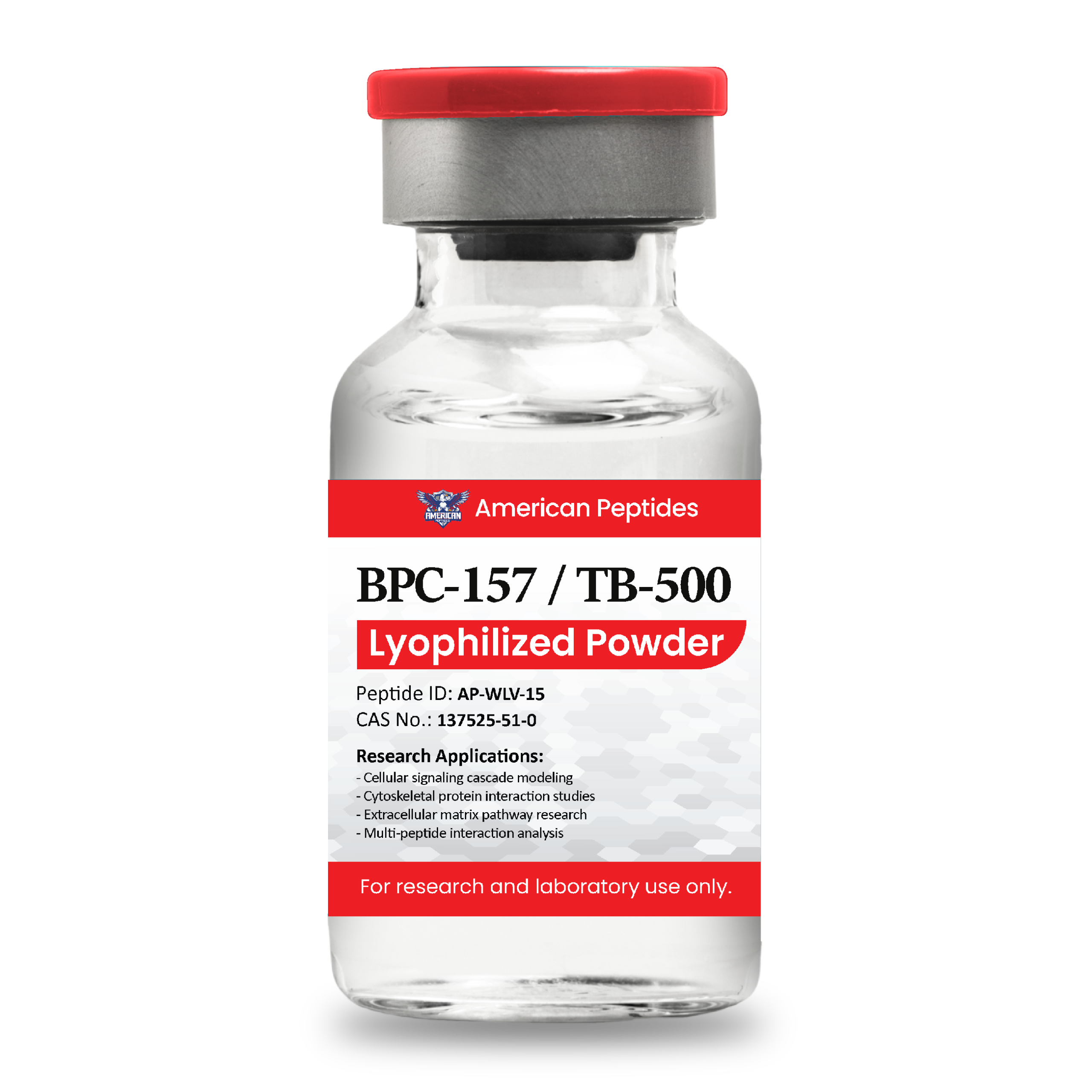
The BPC-157 / TB-500 “Wolverine” Blend is a dual-component lyophilized peptide formulation designed for laboratory research investigating cellular signaling, cytoskeletal dynamics, extracellular matrix interactions, and multi-peptide pathway coordination.
The BPC-157 / TB-500 “Wolverine” Blend is a dual-component lyophilized peptide formulation designed for laboratory research investigating cellular signaling, cytoskeletal dynamics, extracellular matrix interactions, and multi-peptide pathway coordination.
This formulation combines two widely studied peptides with distinct but potentially complementary research profiles:
- BPC-157 — a synthetic peptide derived from a gastric protein fragment, commonly studied in cytoprotective signaling and nitric-oxide–associated pathways
- TB-500 — a synthetic fragment of thymosin beta-4, investigated for its interaction with actin-binding proteins and cellular migration models
By integrating these peptides into a single controlled formulation, the Wolverine blend provides a structured platform for evaluating overlapping signaling cascades and coordinated cellular response frameworks in vitro and in vivo research models.
Researchers use dual-peptide systems like this to examine how different molecular pathways may interact within complex biological systems, rather than studying isolated compounds independently.
Product Details
- Form: Lyophilized multi-peptide blend
- Composition: BPC-157 + TB-500
- Purity: ≥99% (component-level analytical verification)
- Manufacturing: Controlled production standards
- COA: Available upon request
- Intended Use: Laboratory research only
The Wolverine blend combines two peptides that interact with distinct yet potentially complementary biological signaling systems.
BPC-157
BPC-157 is investigated in laboratory models for its interaction with:
- Nitric oxide signaling pathways
- Cytoprotective cellular response mechanisms
- Angiogenic signaling models
- Cellular communication frameworks
Research involving BPC-157 often focuses on how cells respond to environmental stressors and how signaling pathways regulate cellular integrity.
TB-500 (Thymosin Beta-4 Fragment)
TB-500 is a synthetic fragment of thymosin beta-4 and is studied in relation to:
- Actin-binding protein regulation
- Cytoskeletal organization
- Cellular migration models
- Tissue-level structural signaling frameworks
Its interaction with actin dynamics makes it relevant in research involving cellular movement and structural protein systems.
Integrated Dual-Peptide Research Model
When combined, BPC-157 and TB-500 allow researchers to investigate:
- Multi-pathway cellular signaling interaction
- Cytoskeletal and extracellular matrix coordination
- Cellular response and structural adaptation models
- Peptide synergy and combinatory pathway analysis
This dual-peptide system supports experimental designs that evaluate complex biological interactions across multiple signaling networks.
The Wolverine blend is utilized in laboratory environments for research into:
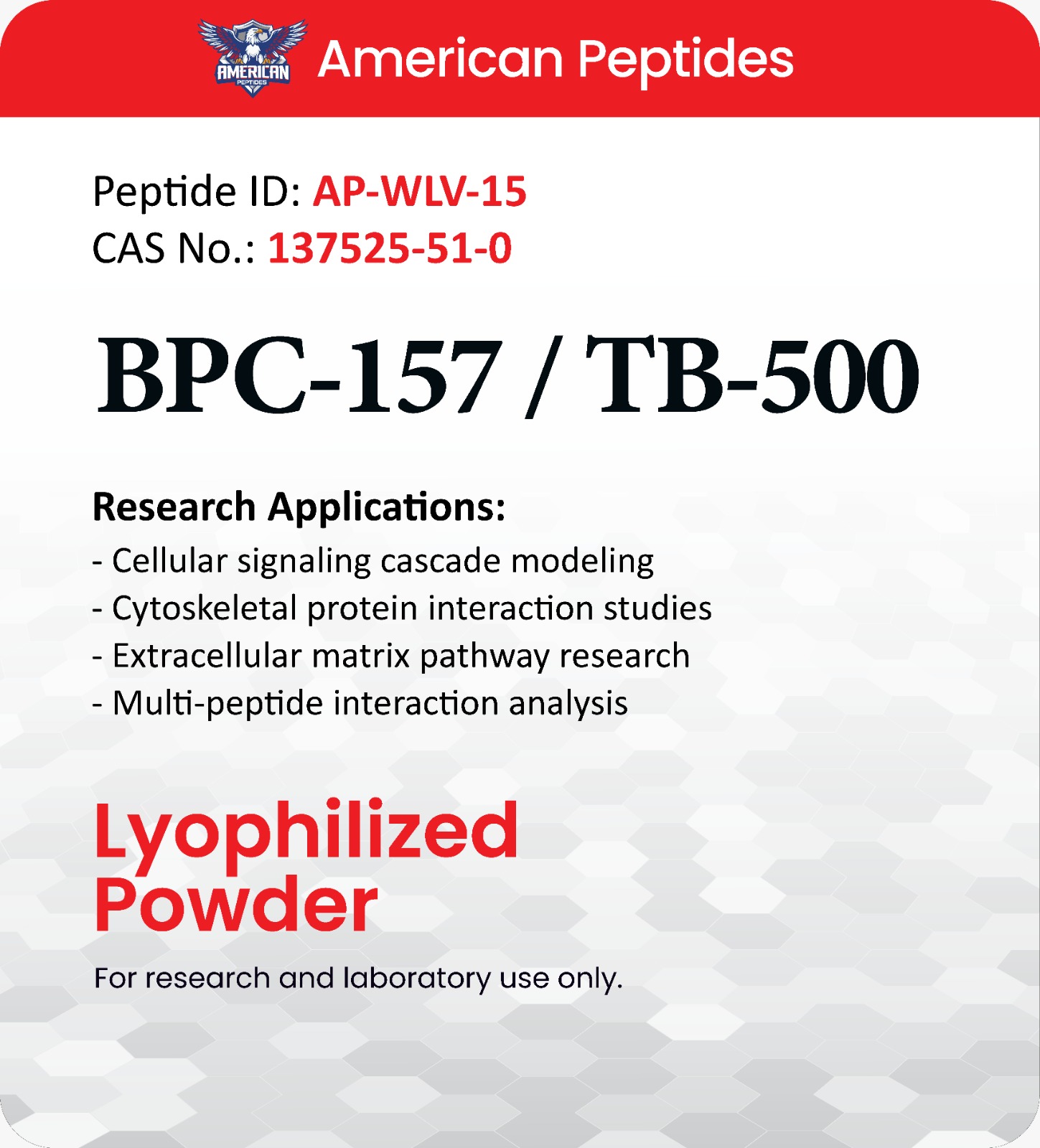
- Cellular signaling cascade modeling
- Cytoskeletal protein interaction studies
- Extracellular matrix pathway research
- Multi-peptide interaction analysis
- Cellular migration and structural pathway investigation
- Integrated biological response frameworks
Researchers are responsible for experimental design and compliance with all applicable regulations.
Researchers may select the Wolverine blend for:
- Multi-peptide synergy investigation
- Consolidated formulation for streamlined experimental design
- Reduced variability compared to separate peptide preparation
- Controlled evaluation of coordinated signaling pathways
- Reproducible laboratory conditions using standardized ratios
The single-vial structure enables efficient study of combinatory peptide systems.
Each peptide component undergoes analytical verification to ensure research-grade quality and consistency.
Testing procedures may include:
- High-Performance Liquid Chromatography (HPLC) purity testing
- Identity confirmation analysis
- Batch traceability documentation
- Controlled lyophilization processes
- Sterile vial packaging
Certificates of Analysis are available upon request.
The Wolverine blend is supplied as a sterile lyophilized multi-peptide powder.
Storage Guidelines:
- Store refrigerated at 2–8°C
- Protect from light exposure
- Avoid repeated temperature cycling
- Handle using proper laboratory protocols
This product is supplied dry and is not pre-reconstituted.
It is a dual-peptide research formulation combining BPC-157 and TB-500 in a single lyophilized vial for laboratory study of multi-pathway cellular signaling systems.
Researchers may use combination formulations to investigate how multiple peptides interact across different signaling pathways, enabling evaluation of coordinated biological responses.
It is supplied as a sterile lyophilized powder for laboratory research use.
No. This is a multi-component formulation and does not have a single CAS number. Individual component CAS numbers are:
- BPC-157: 137525-51-0
- TB-500: 77591-33-4
No. This product is strictly intended for laboratory research purposes only.
Store refrigerated at 2–8°C, protected from light, and handled according to laboratory best practices.
Each component is analytically verified to ≥99% purity, with batch-level documentation available.
COA documentation can be requested by contacting support and referencing your order details.
| Select Mg | 10mg, 20mg |
|---|
RELATED PRODUCTS
GLOW70

Reviews
There are no reviews yet.