

Semax – Research Overview
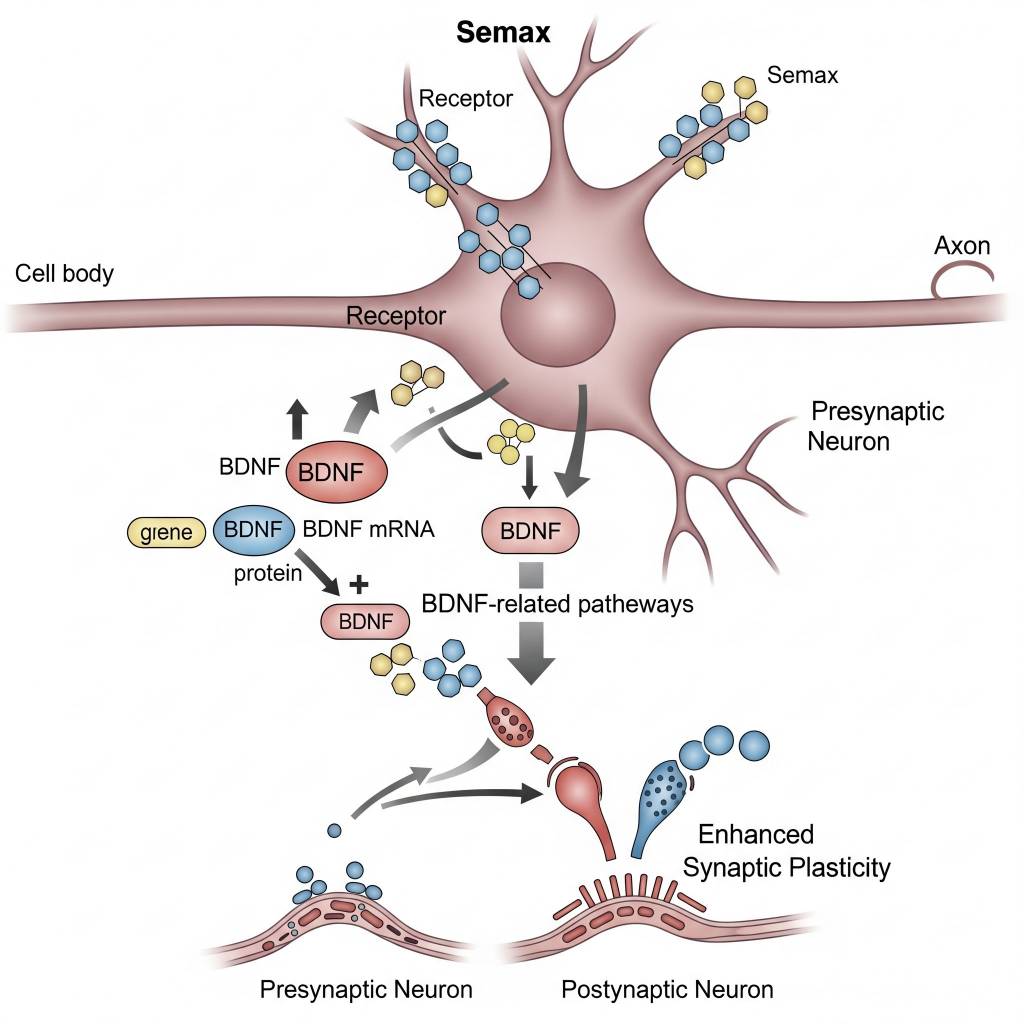
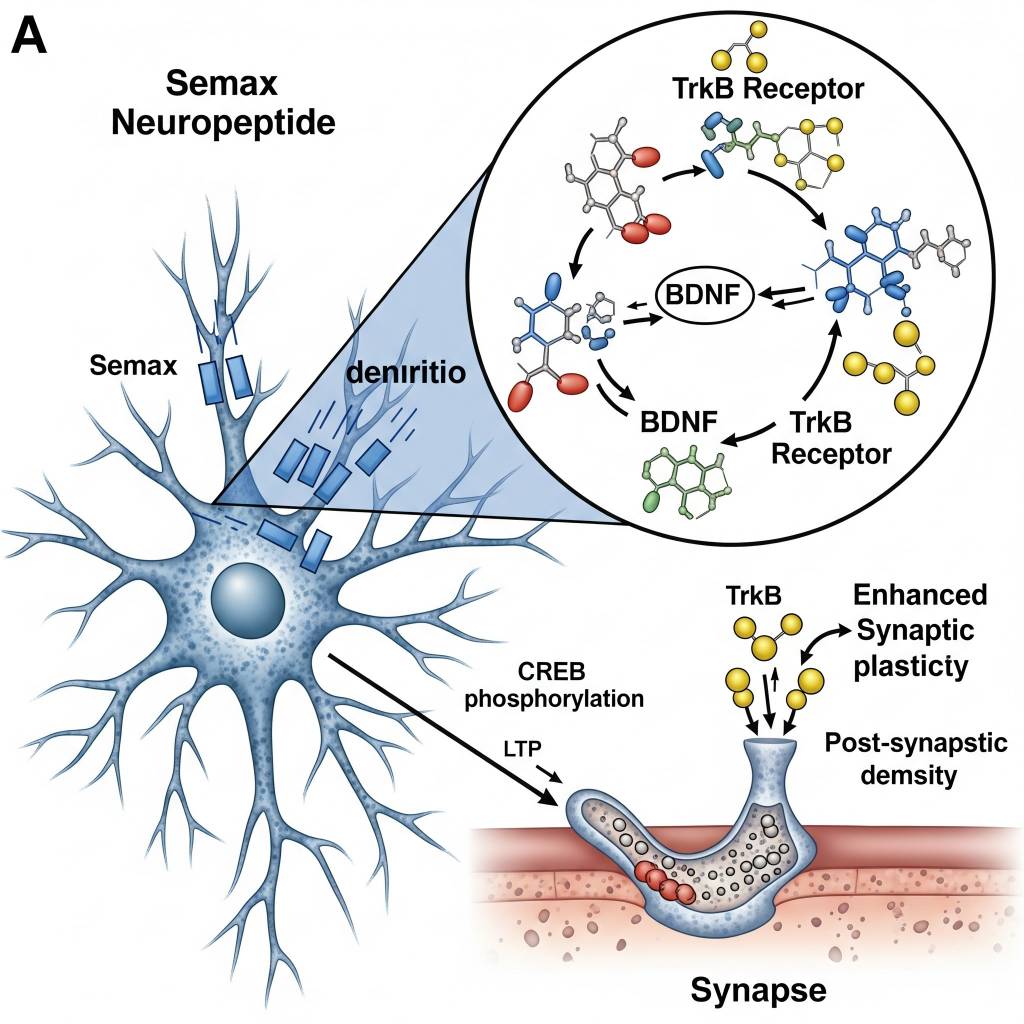
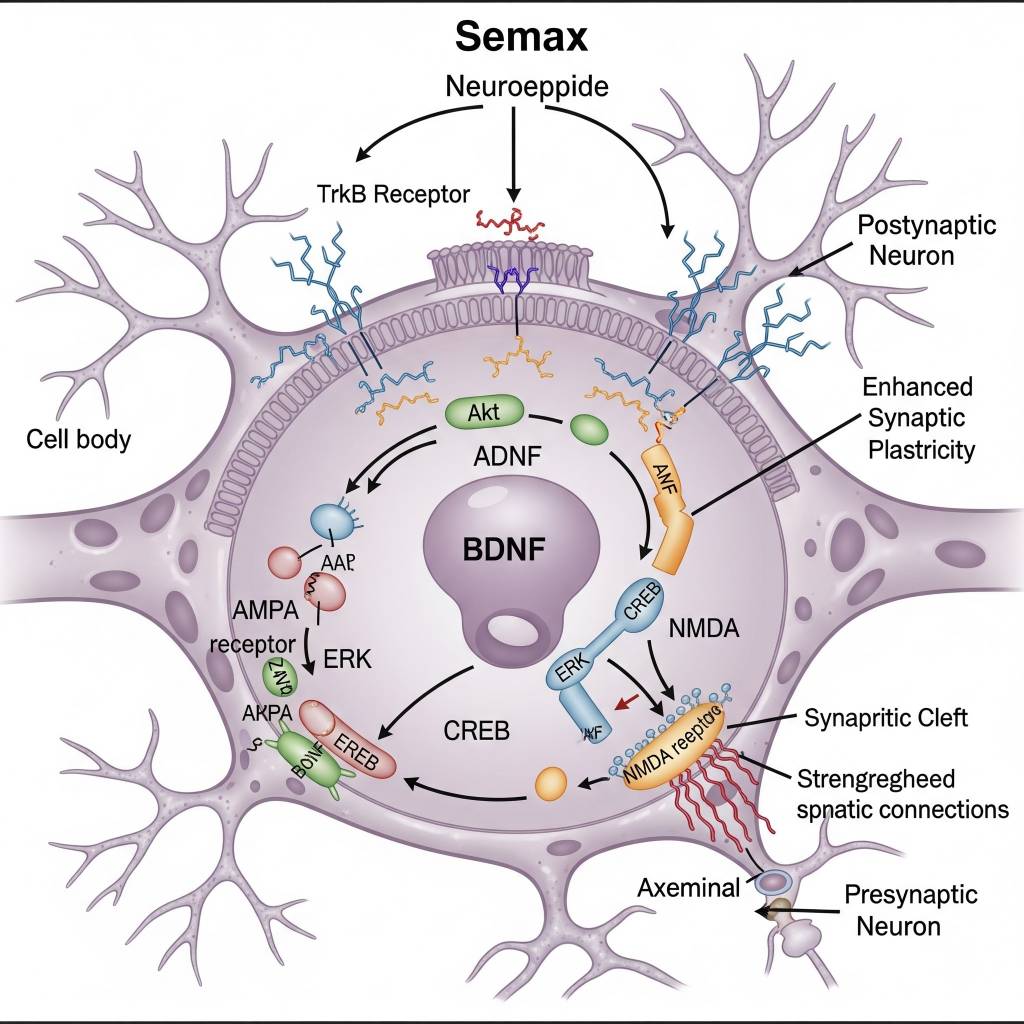
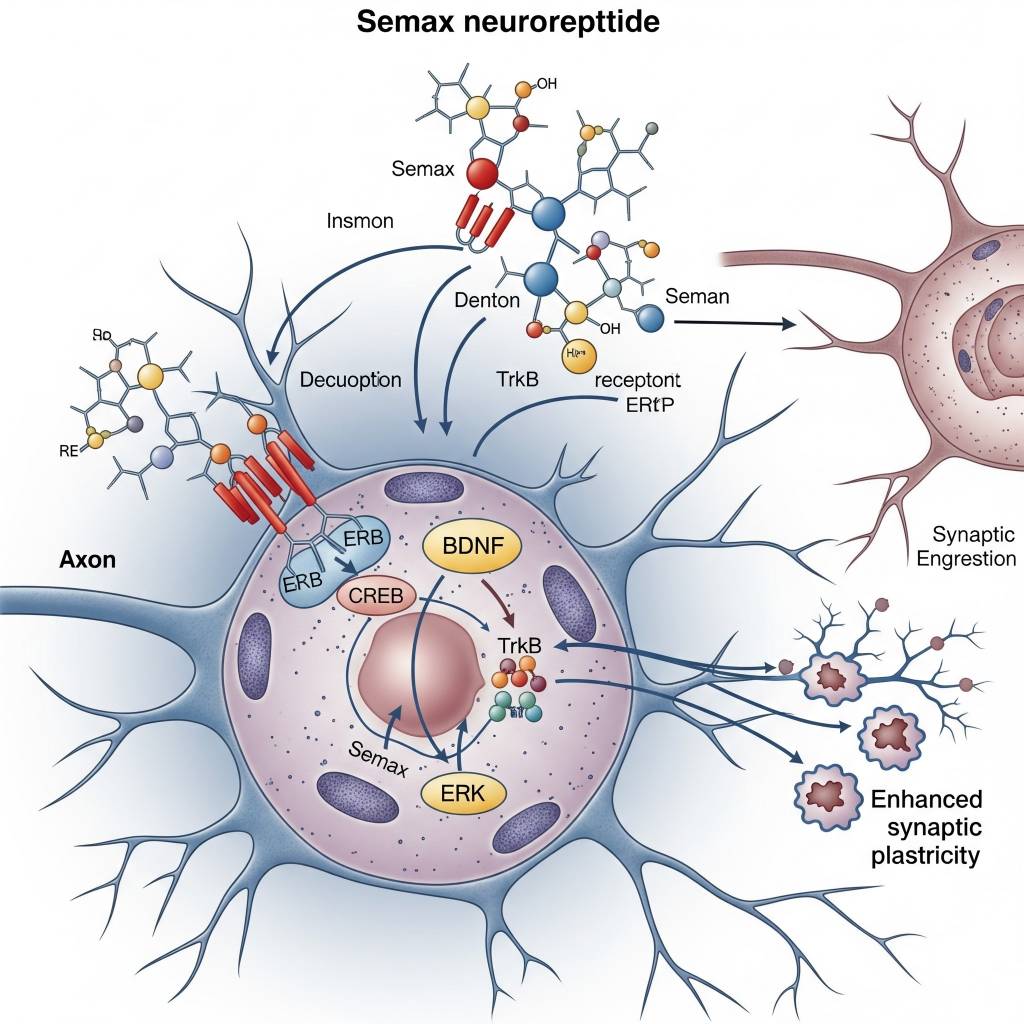
Semax is a synthetic neuropeptide analog derived from adrenocorticotropic hormone (ACTH 4–10) that has been extensively studied in preclinical and laboratory research for its role in cognitive signaling, neuroplasticity pathways, and stress-response modulation. Due to its influence on brain-derived neurotrophic factor (BDNF)–related signaling and central nervous system regulation, Semax is frequently referenced in neuroscience research, cognitive performance studies, and neuroprotective signaling investigations.
This page provides a research-focused, educational overview of Semax, including its molecular classification, mechanism of action in research contexts, and primary areas of scientific investigation.
Compound Overview
Semax is classified as a synthetic neuropeptide derived from the ACTH peptide fragment, modified to remove hormonal activity while preserving neuromodulatory signaling properties. In laboratory research environments, Semax is studied for its ability to influence cognitive processing, memory-associated pathways, and stress-adaptive neuroendocrine signaling.
Its non-hormonal design makes Semax a key compound in focused brain-signaling and cognition research models.
Research Background & Classification
From a molecular research perspective, Semax belongs to a class of regulatory neuropeptides involved in central nervous system signaling optimization. Researchers study Semax to explore how peptide-based signaling affects:
- Neuroplasticity and synaptic adaptation
- BDNF-associated signaling pathways
- Cognitive processing and learning models
- Stress resilience and adaptive response mechanisms
- Cerebral blood flow and neuronal metabolism signaling
Semax has been widely cited in cognitive neuroscience research, neuroprotection studies, and stress-adaptation investigations.
Mechanism of Action (Research Context)
In laboratory research settings, Semax has been studied for its influence on neurotrophic factor expression, particularly BDNF-related pathways, which play a role in synaptic plasticity and learning processes. Researchers analyze how Semax affects gene expression, neurotransmitter balance, and neuronal signaling efficiency under controlled experimental conditions.
Semax is also examined in studies exploring stress-response modulation, HPA axis signaling balance, and cerebral signaling optimization. All mechanisms are discussed strictly within a research context, without implication of clinical or therapeutic application.
Areas of Scientific Research Interest
Semax has been referenced in scientific research related to:
- Cognitive enhancement signaling pathways
- Neuroplasticity and synaptic adaptation research
- BDNF-associated peptide signaling
- Stress-response and resilience studies
- Central nervous system regulation
- Neuroprotective signaling mechanisms
- Learning and memory pathway investigations
- Neuroendocrine adaptation research
These areas support broader investigation into how neuropeptides regulate cognition, stress adaptation, and neural efficiency in preclinical research environments.
Stability & Handling Considerations
In laboratory environments, Semax is handled according to standard peptide research protocols. Researchers consider factors such as temperature stability, light exposure, solution composition, and peptide degradation risk when conducting neuroscience experiments. Proper handling and storage are essential to preserve consistent neuro-signaling behavior during extended cognitive and neuroplasticity research studies.
Research Context Notes
This overview is intended for educational and informational purposes for individuals studying neuroscience, cognitive biology, neuroendocrinology, and peptide signaling pathways. It does not replace peer-reviewed scientific literature, experimental protocols, regulatory documentation, or institutional research standards.
